


A Tea Planter's Journey

My fathers journey in tea.
By Divya Puri, TeaCupsFull
My father, Late Narendra Kumar Puri, joined Duncan Brothers in 1966 and spent nearly four decades moving through some of the finest tea estates in India. This series is my tribute to those gardens — their history, their tea, and the memories they carry for our family.
Lankapara Tea Estate, Dooars — Where It All Began
The Garden That Started a Career
Where the Jungle Meets Bhutan
There are tea gardens that are simply beautiful. And then there is Lankapara — a garden where beauty carries a certain edge, because the jungle here is not a backdrop. It is a neighbour.
The northern boundary of Lankapara Tea Estate forms the international border between Bhutan and India. The Titi Khola river, with its source in Bhutan a few kilometres upstream, forms the eastern boundary, and on the other bank lies the massive Titi Khola forest, which merges into the larger Hollong Forest Sanctuary. Blogger The forest is dense and alive — monkeys, leopards, bison, deer, wild boar, and towards the southern edge, even rhinoceros have been recorded.

The Dooars region produces 226 million kg of tea, accounting for about a quarter of India's total tea crop, with 154 gardens across the belt. Wikipedia Lankapara is among the oldest and most storied of them — a Duncan Brothers garden that eventually passed to the Duncans Tea Division, which today operates several estates across the Dooars.
The Puri Connection
In 1966, a young economics graduate named Narendra Kumar Puri joined Duncan Brothers and was posted to Lankapara as a Trainee. He was twenty-four years old. He had grown up in Darjeeling, where his father ran a pharmacy at Chowrasta and was known to every passing tea planter. The leaf was already in the family's vocabulary. Now it was in his hands.
Lankapara was where he learned to walk a tea estate — literally and figuratively. To read the slope. To understand what the Dooars rainfall does to a garden in monsoon. To stand in a factory and begin training his senses. It was the beginning of a career that would span nearly four decades and fourteen estates.
He was the sort of man who noticed everything. The colour of chimney smoke. The sound of a roller running slightly off. The smell of leaf at the withering trough that told him — before any instrument could — whether it was ready for the next stage of manufacture. Those instincts were forged here, in the tea garden, the sections and factory of Lankapara.
About the Estate
| Detail | Information |
|---|---|
| Location | Western Dooars, Alipurduar district, West Bengal |
| Northern Border | International boundary with Bhutan |
| Eastern Border | Titi Khola River; Hollong Forest Sanctuary |
| Nearest Railway | New Alipurduar |
| Nearest Airport | Bagdogra (~90 km) |
| Tea Type | CTC; also produces orthodox |
| Notable | Borders wildlife-rich Hollong Forest Sanctuary |
The Tea — What's in the Cup
Lankapara produces a classic Dooars CTC — bold, brisk, and full-coloured, the kind of tea that has fuelled India's morning chai rituals for over a century. The Secret of Tea The garden's proximity to dense forest and the alluvial soils of the Dooars plain give the liquor a distinctive smoothness — bright without being harsh, strong without being flat. It is a garden tea in the truest sense: built for everyday drinking, for the chai kettle, for the cup that starts the morning.
Tasting Profile:
| Attribute | Character |
|---|---|
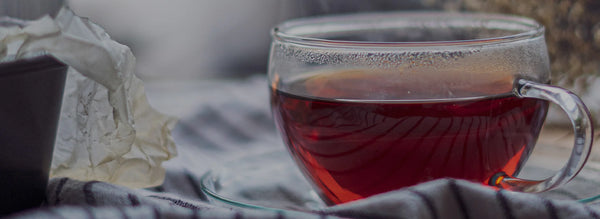
| Liquor Colour | Deep amber to rich copper |
| Flavour | Bold, malty, full-bodied |
| Aroma | Earthy, robust |
| Best Brewed | 95°C, 3–4 minutes |
| Best Enjoyed | With milk; classic morning brew |
Why This Estate Matters to Teacupsfull
Every cup of Dooars tea that Teacupsfull selects carries the institutional knowledge of planters who learned their craft in gardens like Lankapara. Our teas are not selected by algorithms or marketing teams. They are selected by people who have stood in these fields, walked these divisions, and trained their palates in these tasting rooms.
Late Narendra Kumar Puri's career began in Lankapara's finest tea sections. Ours began with his legacy.
My personal connection with Lankapara
When I joined Duncans as a trainee in 1994, I tasted my first batch of teas from Lankapara in the first month of my joining. I was nervous yet excited, I remember entering the tasting room, there were more than a hundred cups laid out for tasting. Mr SK Mitra was the head and started tasting, he paused when it came to Lankapara, he knew my father. He asked 'Divya your father joined tea in Lankapara, come and taste and evaluate the cup', at 23 I was nervous, I was standing next to a man who know tea inside out, the entire tea room was looking at me, I remembered my fathers words and took a sip and swirled it in my mouth and spat it out, Mr Mitra asked me for the tasting notes and evaluation, I was spot on. From that day onwards we developed a special bond in the tasting room.
FAQ
What type of tea does Lankapara produce? Lankapara produces primarily CTC tea — the bold, full-bodied style characteristic of the Dooars region, suited to milk-based preparation and the everyday chai drinker.
What wildlife can be found near Lankapara Tea Estate? The estate borders the Hollong Forest Sanctuary, and residents and workers have long co-existed with elephants, leopards, bison, deer, and monkeys crossing from the adjacent forest.
Who owns Lankapara Tea Estate? Lankapara is currently part of the Duncans Tea Division under the G.P. Goenka group.


